Nowadays, hoodies and sweatshirts became mainstream and a global fashion icon for streetwear, athleisure and everyday fashion, valued for its comfort and versatility. A high quality customized hoodies or sweat wear would help starters build their business quickly and help brand owner stand out their brand. There are several kinds of fabrics are commonly used for hoodies, if you are wondering what are the differences between these fabrics, the guidance will help you get a better know about it.
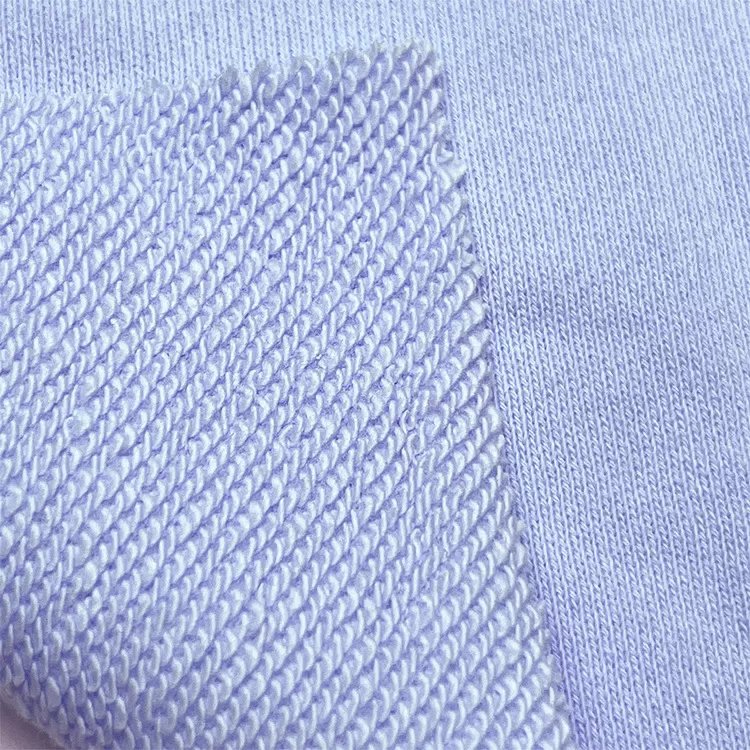

1. French Terry For Customized Hoodies
What is French Terry fabric
A French Terry fabric is a knitted fabric features loops on one side (usually the inner side) and a smooth surface on the other, typically made from cotton or cotton blends
Features:
Moisture-wicking: Absorbs sweat while remaining breathable, ideal for activewear
Cozy & Drapey: Offering comfort for loungewear, hoodies, and tees.
Gram Weight:
Lightweight (180–250 GSM):
- Ideal for summer apparel (e.g., T-shirts, lightweight hoodies).
- Breathable and drapes well but less insulating.
Midweight (250–350 GSM)
- Most versatile for year-round wear (e.g., sweatshirts, joggers).
- Balances softness, durability, and moderate warmth.
Heavyweight (350–450 GSM)
- Used for winter garments (e.g., thick hoodies, lounge pants).
- Offers structure and warmth but may feel bulkier.
Advantage: The fabric is thick and warm, with good elasticity and moisture absorption. It is comfortable to wear and breathable.
Disadvantage: It will shrink, shrinkage depending on the factory’s washing and shrinking process. Also It tends to wrinkle easily, and the pile texture on the underside is prone to being snagged.


2. Interlock
What is Interlock fabric
Interlock is a double-knit fabric known for its smooth, stretchy, and durable structure. It’s a variation of rib knit but with two layers of loops interlocked back-to-back, creating a thicker, more stable material than single knits like jersey.
Features:
- Soft & Drapey: Ideal for close-fitting garments.
- Moderate Stretch: Less stretchy than rib knit but more stable.
- Durable: Thicker than jersey, resistant to pilling and wear.
Advantage: Smooth in touch, with precise quality, good elasticity, and resistant to shrinking.
Advantage: Smooth in touch, with precise quality, good elasticity, and resistant to shrinking.
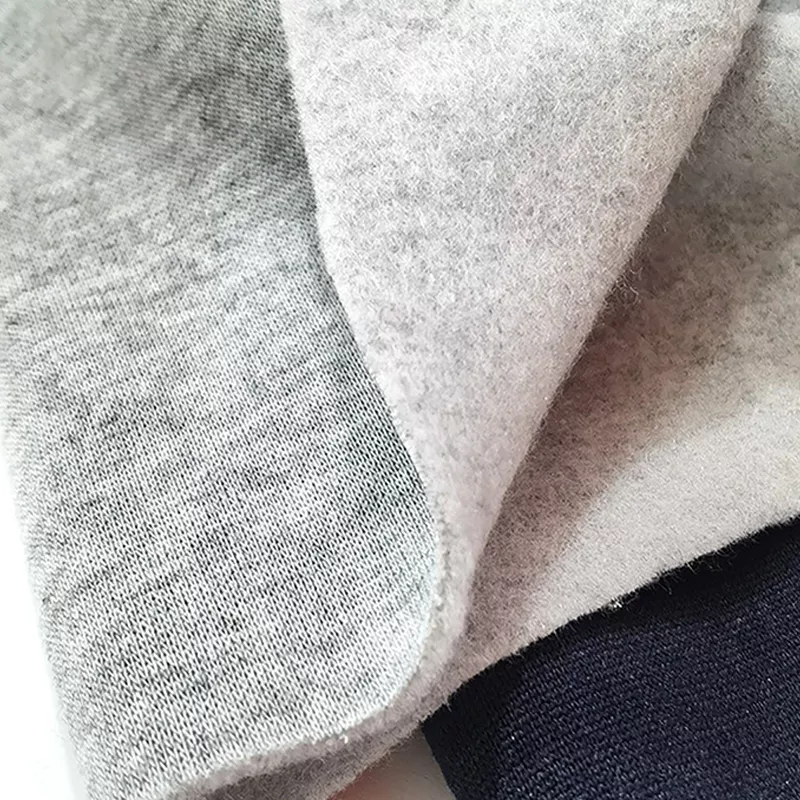

3. Fleece
What is Fleece fabric
Fleece is a soft, insulating synthetic fabric originally developed as an alternative to wool. Known for its lightweight warmth, moisture-wicking properties, and plush texture, it’s widely used in cold-weather apparel, athleisure, and home textiles.
Typically made from cotton / polyester (recycled or virgin), sometimes blended with spandex for stretch.
Features:
- Thermal insulation: Traps heat effectively despite being lightweight.
- Quick-drying: Wicks moisture better than natural fibers like cotton.
- Breathability: Varies by density; some fleece is wind-resistant.
Advantage: Excellent warmth retention, thicker and softer fabric, moisture-wicking and breathable.
Disadvantage: Prone to shrinking, slight shedding, not recommended for wearing alone


4. Polar
Polar fabric (often called polar fleece) is a soft, insulating synthetic textile made primarily from polyester. Originally developed in the 1970s as a lightweight alternative to wool, it’s renowned for its warmth, moisture-wicking properties, and plush texture. Below is a detailed breakdown of its characteristics, uses, and care.
Typically 100% polyester (including recycled options like rPET for sustainability).
Features:
- Exceptional Warmth: Traps body heat efficiently despite being lightweight.
- Quick-Drying: Wicks moisture faster than cotton or wool.
- Durable & Easy Care: Resists wrinkles and machine-washable
Advantage: Soft and thick to the touch, skin-friendly, warm, and non-shedding.
Disadvantage: Poor moisture-wicking, easy to pilling after wearing for a few time


5. Velvet
Velvet is a luxurious, soft-pile fabric known for its dense, plush texture and distinctive sheen. Traditionally made from silk, modern velvet can also use cotton, wool, or synthetic fibers (e.g., polyester, rayon).
Features:
- Pile Surface: Short, evenly cut fibers create a smooth, lustrous finish.
- Drape & Weight: Medium to heavyweight, with a fluid drape ideal for elegant garments.
- Light Reflection: Unique sheen that changes appearance with light angles (“color play”)
Advantage: Flexible, soft, comfortable texture, does not pill and colorfast.
Disadvantage: Slightly hair-slip, Static electricity easily occurs and not breathable.


6. Velour
Velour is a plush, stretchy fabric with a soft pile surface, blending the luxury of velvet with the comfort of knit fabrics. It’s commonly made from cotton, polyester, or blends (often with spandex for elasticity). Below is a detailed breakdown of its features, uses, and care.
Features:
- Texture: Similar to velvet but with a knitted base (not woven), making it lighter and more flexible.
- Pile Surface: Short, dense fibers brushed to create a smooth, velvety feel.
- Stretch: Often includes spandex (5–15%) for better fit and movement.
- Sheen: Less glossy than velvet, with a subtle matte-to-lustrous finish.
Advantage: It has good warmth retention and elasticity, with a comfortable feel.
Disadvantage: Prone to attracting lint, prone to static electricity
Final Words
Above are the 6 most commonly used fabrics for hoodies, sweatshirts, joggers and other sweat wear. the best fabric choice depends on your priorities: warmth, durability, print/embroidery compatibility, and aesthetic appeal. Fleece and french terry is nice for streetwear, velour or high-GSM fleece for premium loungewear, and polar and moisture-wicking blends would be better for outdoors and athleisure.
Request fabric swatches from your factory to compare handfeel, weight, and print results, make a sample to test your market before bulk order.
